Here’s a masterpost of resources to aid in learning South Asian languages! This is by NO means comprehensive. A very limited number of languages are represented here. This search was really frustrating because the more I looked, the more I realized how many dozens of South Asian languages are simply not represented or their existence acknowledged. If you have any resources/languages you’d like to me to add, please let me know!
Here is a masterpost of MOOCs (massive open online courses) that are available, archived, or starting soon. I think they will help those that like to learn with a teacher or with videos. You can always check the audit course or no certificate option so that you can learn for free.
everyone talks about immersion – how important it is to surround yourself with your target language in order to learn effectively, and I agree that it’s a crucial point in making progress. the standard solutions are reading books, talking to people online, listening to music etc etc, which are all good recommendations and i encourage everyone to try them out! this list will include some more ways of immersion which i find to take very little effort, but which still have good effects.
1. blogs, facebook pages, apps
“reading articles” is common advice, but how often do you even read articles in your native language, much less your target one? In order to still increase exposure to your target language, like news sources in your TL on facebook so you see what they post (even if you don’t click on it), follow blogs that post in your TL, and download apps that will send you push notifications (newspapers, magazines, football, you name it). if you see something interesting, read it.
2. play words with friends and other word-based games
if your TL is one of these, you can play words with friends and expand your vocabulary in absolutely no time. it’s very difficult in the beginning (i even had trouble with english first), but it gets so much better so quickly! you’re also being matched with similar skill-levels, so it should still be fun, and you can play games in different languages simultaneously without having to change the settings. there are many word-based games out there (it has its own category in the app store), so try what you like best! 🙂
3. talk to siri/voice recognition technology
siri/whatever programme you have listens to short sentences, will provide you with a written and spoken answer, and won’t make fun of you for mistakes. It’s also great for practising smalltalk like “how’s the weather”.sSet your alarm or ask to have appointments added to your calendar.
4. talk to yourself
ever wanted to be on graham norton and tell everyone about the imaginary grammy/nobel prize/oscar you’ve won? or explain your grandma’s chocolate cake recipe on the great british bake off? or write a novel about your gap year backpacking experience? now’s your chance – find some time when you’re alone (or not, if you don’t mind others listening i guess), and start talking. have your own cooking show while you make lunch, make a commercial for your shampoo while you’re in the shower, reminisce about your (imaginary or real) life experience, but do it in your TL. you’ll learn vocabulary for things you actually care about and you’ll gradually lose the fear of speaking. plus, you’ll be super prepared for when graham norton really does invite you to his show.
5. the “how-would-i-say-this”-mentality
this may take a bit of time, but after a while it’s there and won’t go away again. you use your native language presumably every day, especially for mundane things like buying bread or asking where the bathroom is, or reading an ad on the bus. try to get used to translating those small sentences from your native language into your TL. you don’t have to put a lot of effort or time into this – just reminding your brain of your TL’s existence and trying to form simple sentences every day does loads for your progress. sometimes you might look a word up, sometimes you might paraphrase or simplify it, but every bit helps.
Linguasphere – Kind of like WALS, if I remember correctly, but not quite. (Note: The website is in French.)
GOLD – a unique listing of linguistic terms and definitions. Right now it appears to be having technical issues, but when it works it’s really great. Just click “View GOLD” at the top.
Many Languages (or General Resources)
This is a directory of apparently scanned PDFs of many, many, many books regarding various languages. There are grammars, dictionaries, and more for more than 25 languages.
Conjuguemos: An awesome website, Conjuguemos has verb and vocabulary activities in several (mostly Romance) languages.
Duolingo – don’t tell me you don’t know what this is.
Memrise – let me guess, you don’t know what this is either?
Quizlet – flash cards and accompanying games. There are also many apps that connect to Quizlet and provide Spaced Repetition or other activities with the cards.
Lang-8 – write in the language you’re learning, let others correct you. In turn, you correct posts in your native language.
LingQ links you (get it? LingQ, link you? HAHA) to native speakers around the world. You can join live conversations, get writing corrected, and so on and do the same for them.)
FluentU – a compilation of real world videos in your target language with interactive captions.
Babbel – another language learning resource with many languages available.
Ba Ba Dum – 1500 words, 11 languages, 5 games. Unique site.
Radiolingua – quick and easy sets of beginner’s lessons in many languages.
Busuu is yet another website for learning the basics of many languages. It also features video-chats with native speakers and many many units of grammar/vocab.
Omniglot – writing, writing, and more writing. Goes over the writing system and accompanying pronunciation of every language imaginable, including many conlangs and extinct languages. Truly amazing resource.
LanguageRealm has some good stuff for the languages that it features.
AncientScripts is another website for writing systems, but it is restricted to ancient scripts, many of which are for languages now out of use.
Transparent Language Blog is wonderful. The right side has a list of the languages for which they have any content posted – and for each language there is quite a bit.
SaySomethingIn… is most useful for Welsh but has a few other languages. It involves sessions of listening and repeating along with eventual reading and grammar.
Digital Dialects – games for learning basic vocabulary in lots and lots of languages.
LanguageReef – Indian languages. So many Indian languages.
200 Word Project – learn the basic vocabulary of six African languages by clicking and listening to native pronunciations.
Let’s not forget Wikipedia. Not only does the English version have something on just about any language imaginable, but the website has articles available in lots of languages. I like clicking the “Random article” button and reading whatever comes up.
AwesomeFrench is the greatest French Tumblr blog in the universe. She answers questions about culture and grammar, but don’t be one of those annoying people that asks homework questions or advice about how to turn on your French boyfriend or girlfriend.
Namasensei’s Japanese lessons on YouTube. Goes kind of slowly, and it’s unique because the guy doing the tutorials is usually fairly drunk when he records. But he is living in Japan and has some interesting advice as well as a good understanding of the language.
Japanese from Zero on YouTube – amazing collection of videos ranging from pure grammar lessons to questions and useful explanations
Tae Kim’s grammar guide is seriously one of the best resources out there. And it’s totally free. You can navigate the website, download a PDF for free, or buy a print version.
Just lots of good stuff here, including a nice list of important upper-level words.
One of many websites for learning kanji, Kanjidamage is interesting because the author has a good sense of humor and also explains a lot about the history of the Japanese writing system, so that you can understand it better.
Project Root List aims to list all of the roots and vowel combinations in the Quran. Since Arabic hasn’t changed much in that regard, it’s useful for modern Arabic, too.
A PDF of the book Arabic Verbs and Essentials of Grammar.
You can search the Quran in Classical Arabic here.
Classical Arabic: LearnArabicOnline.com. This is a fantastic resource in that it not only talks about reading and grammar, but also writing styles and eloquence in writing. It is strictly for Classical Arabic, however, not modern spoken or Modern Standard Arabic.
Hindi
Hindi script – really good animations of stroke order and how to write as well as providing instructions on writing.
Quillpad looks like a really great tool for typing in Hindi as well as other Indian languages. Simply type the English letters and the computer converts it. (Note: for beginners still trying to learn the script, learn the script and manually put the characters in. Force yourself to write the script to get yourself to think in that language!)
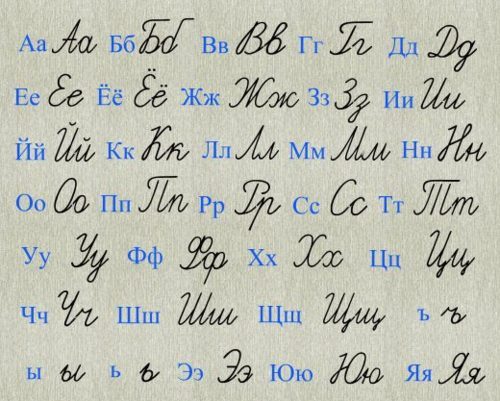
Learn Russian Language – another good website for grammar rules along with the alphabet, pronunciation, and a bit of culture.
100 Top Resources for Learning Russian according to some person. Actually a really good list, includes rough level at which you’ll find each resource useful and the list is broken down by category (textbooks, online, stuff, etc.).
Here is Beowulf in Old English. There’s also a link to a modern English translation just under the title of the page.
Korean
Set of graphics that are wonderful for explaining the Korean script.
Really great website for grammar, script, and vocab. Also offers many of the beginner’s lessons and some of the more advanced ones in Spanish and/or Russian, for you overachievers out there.
Estonian
Here is a nice PDF on some of the characteristics of the Estonian language.
Grammar. This page links to the intermediate stuff; you can go to the menu at the top, and the really basic stuff will be under Discover Estonia.
DW – German news website. Available in 30 languages, however.
Welsh
Lots of vocabulary. (Note: In my experience, this website has only been marginally useful because it doesn’t give gender, some of its nouns are plural when they should be singular, and so on.)
A long, detailed, well-explained resource from the BBC on Welsh grammar.
This is a really good video for listening to the clicks involved in Xhosa pronunciation, including the one that begins the language’s name. He has other lessons, as well.
Mandarin
Some themed vocabulary lists. Actually lots of them.
Here is a more or less miscellaneous collection of concepts and vocab about the Chinese language and culture.
MandarinMadeEZ – Some fun and simple YouTube lessons from Fiona Tian. She’s kind of awkward so if you’re looking for something really serious, don’t go here. Also, cats.
Native American Langauges
Here is an excellent resource for many Native American languages in general.
More links – only some of these are really good, but most of them are useful.
Cherokee language lessons. The link goes to the Cherokee syllabary and pronunciation. Also some readings available.
And finally, I recently started a resources tag (here) that I think I’ll just link to rather than trying to transfer all that stuff over to this post.
I apologize that some of these headings have only one or two resources for them… but remember that the “Many Languages” category can not only provide a lot of further resources and information for the languages listed here, but can also provide stuff for languages not mentioned here!
If you guys have more stuff you’d like me to add for any language, send it to me and I’ll check it out and maybe update this post 🙂
Salut. I’m here to save the ass of the ones who are learning french and are lost with so many resources. I plan to update later, but, for now, that is.
hi everyone! i made a french masterpost about a year ago which can be found here, but it’s a little outdated and i don’t use some of the resources anymore. here is a new updated masterpost about how to learn french!
apps
duolingo is good to start out with, but don’t rely on it entirely. duolingo is more beneficial if you use it as a review rather than a learning resource.
memrise is amazing for any level of french!
drops is a really good vocabulary app. it exposes you to everyday vocabulary you may need while traveling to france. it’s also super aesthetic! it only allows you to use it for 5 minutes a day, but i find it perfect to use before i go to bed.
mango is offered free from libraries in the u.s. and canada. it teaches you with a conversation. this app is very practical and it helps with speaking skills. if you live outside of the u.s. message me and i can make you a free account.
mindsnacks is also a fantastic vocabulary app, but it doesn’t work with ios 11 and you have to pay $4.99 to unlock all the lessons. but if you can get it, it’s definitely worth it! the app forces you to remember all the vocab, and it pronounces everything for you very clearly.
writing/reading
write/read something every day in french! no matter what it is, it will greatly benefit your learning. try to use what you learn each day in your daily writing practice.
here is a website with french children’s books for free. it pronounces the words and offers an english translation which is great for beginners.
1jour1actu is good for A2-C1 learners. they have an app as well as a website.
for more advanced learners, i recommend lemonde.fr
there are several strategies for what to do when coming across a word you don’t know. i usually use a dictionary/google translate and highlight/write down the word i looked up, then review those words before i sleep (sometimes). the more exposure you get to words, the more familiar you will become. keep reading!
forvo is an amazing website where you can see how a word is pronounced by a native speaker. it’s a literal blessing to this earth.
grammar
it’s very important to keep a notebook for your french studies, because french grammar can get really crazy. review your notes weekly to retain the information!
pick a good textbook/workbook to take notes from. i personally used french for dummies. many free textbooks and workbooks can be found at this link, so you can choose which one you think will be best for you.
thoughtco is a good website for when you need help on a specific grammar topic. you can add some of their lessons to your notebook!
rocketlanguages is also good to start out with. same as mango, it’s free to anyone in the u.s. and canada with a library card. it’s good for conversation practice and grammar.
listening
my favorite place to go to for practice is youtube. check out this list of most popular french youtubers!
music is good for listening practice as well. if you have time, look at the lyrics while you listen. maybe memorize a song!
a weekly schedule could look like completing 1 lesson in your textbook, reviewing previous lessons, practicing with apps, writing/watching/reading something, etc.
each day you can pick something off of the picture below! listening monday, writing tuesday, reading wednesday…
depending on how much time you have to study, spending 1(+) hour per day is a good ballpark if you want to advance easily in the language.
everyone is different, but this is how i choose to study french. i made a table with each form of practice and i choose 2-3 things off the table to study from (see the picture below). making this is helpful because you spend more time studying the language than looking for ways to study the language. everything is already there for me!
Linguasphere – Kind of like WALS, if I remember correctly, but not quite. (Note: The website is in French.)
GOLD – a unique listing of linguistic terms and definitions. Right now it appears to be having technical issues, but when it works it’s really great. Just click “View GOLD” at the top.
Many Languages (or General Resources)
This is a directory of apparently scanned PDFs of many, many, many books regarding various languages. There are grammars, dictionaries, and more for more than 25 languages.
Conjuguemos: An awesome website, Conjuguemos has verb and vocabulary activities in several (mostly Romance) languages.
Duolingo – don’t tell me you don’t know what this is.
Memrise – let me guess, you don’t know what this is either?
Quizlet – flash cards and accompanying games. There are also many apps that connect to Quizlet and provide Spaced Repetition or other activities with the cards.
Lang-8 – write in the language you’re learning, let others correct you. In turn, you correct posts in your native language.
LingQ links you (get it? LingQ, link you? HAHA) to native speakers around the world. You can join live conversations, get writing corrected, and so on and do the same for them.)
FluentU – a compilation of real world videos in your target language with interactive captions.
Babbel – another language learning resource with many languages available.
Ba Ba Dum – 1500 words, 11 languages, 5 games. Unique site.
Radiolingua – quick and easy sets of beginner’s lessons in many languages.
Busuu is yet another website for learning the basics of many languages. It also features video-chats with native speakers and many many units of grammar/vocab.
Omniglot – writing, writing, and more writing. Goes over the writing system and accompanying pronunciation of every language imaginable, including many conlangs and extinct languages. Truly amazing resource.
LanguageRealm has some good stuff for the languages that it features.
AncientScripts is another website for writing systems, but it is restricted to ancient scripts, many of which are for languages now out of use.
Transparent Language Blog is wonderful. The right side has a list of the languages for which they have any content posted – and for each language there is quite a bit.
SaySomethingIn… is most useful for Welsh but has a few other languages. It involves sessions of listening and repeating along with eventual reading and grammar.
Digital Dialects – games for learning basic vocabulary in lots and lots of languages.
LanguageReef – Indian languages. So many Indian languages.
200 Word Project – learn the basic vocabulary of six African languages by clicking and listening to native pronunciations.
Let’s not forget Wikipedia. Not only does the English version have something on just about any language imaginable, but the website has articles available in lots of languages. I like clicking the “Random article” button and reading whatever comes up.
AwesomeFrench is the greatest French Tumblr blog in the universe. She answers questions about culture and grammar, but don’t be one of those annoying people that asks homework questions or advice about how to turn on your French boyfriend or girlfriend.
Namasensei’s Japanese lessons on YouTube. Goes kind of slowly, and it’s unique because the guy doing the tutorials is usually fairly drunk when he records. But he is living in Japan and has some interesting advice as well as a good understanding of the language.
Japanese from Zero on YouTube – amazing collection of videos ranging from pure grammar lessons to questions and useful explanations
Tae Kim’s grammar guide is seriously one of the best resources out there. And it’s totally free. You can navigate the website, download a PDF for free, or buy a print version.
Just lots of good stuff here, including a nice list of important upper-level words.
One of many websites for learning kanji, Kanjidamage is interesting because the author has a good sense of humor and also explains a lot about the history of the Japanese writing system, so that you can understand it better.
Project Root List aims to list all of the roots and vowel combinations in the Quran. Since Arabic hasn’t changed much in that regard, it’s useful for modern Arabic, too.
A PDF of the book Arabic Verbs and Essentials of Grammar.
You can search the Quran in Classical Arabic here.
Classical Arabic: LearnArabicOnline.com. This is a fantastic resource in that it not only talks about reading and grammar, but also writing styles and eloquence in writing. It is strictly for Classical Arabic, however, not modern spoken or Modern Standard Arabic.
Hindi
Hindi script – really good animations of stroke order and how to write as well as providing instructions on writing.
Quillpad looks like a really great tool for typing in Hindi as well as other Indian languages. Simply type the English letters and the computer converts it. (Note: for beginners still trying to learn the script, learn the script and manually put the characters in. Force yourself to write the script to get yourself to think in that language!)
Learn Russian Language – another good website for grammar rules along with the alphabet, pronunciation, and a bit of culture.
100 Top Resources for Learning Russian according to some person. Actually a really good list, includes rough level at which you’ll find each resource useful and the list is broken down by category (textbooks, online, stuff, etc.).
Here is Beowulf in Old English. There’s also a link to a modern English translation just under the title of the page.
Korean
Set of graphics that are wonderful for explaining the Korean script.
Really great website for grammar, script, and vocab. Also offers many of the beginner’s lessons and some of the more advanced ones in Spanish and/or Russian, for you overachievers out there.
Estonian
Here is a nice PDF on some of the characteristics of the Estonian language.
Grammar. This page links to the intermediate stuff; you can go to the menu at the top, and the really basic stuff will be under Discover Estonia.
DW – German news website. Available in 30 languages, however.
Welsh
Lots of vocabulary. (Note: In my experience, this website has only been marginally useful because it doesn’t give gender, some of its nouns are plural when they should be singular, and so on.)
A long, detailed, well-explained resource from the BBC on Welsh grammar.
This is a really good video for listening to the clicks involved in Xhosa pronunciation, including the one that begins the language’s name. He has other lessons, as well.
Mandarin
Some themed vocabulary lists. Actually lots of them.
Here is a more or less miscellaneous collection of concepts and vocab about the Chinese language and culture.
MandarinMadeEZ – Some fun and simple YouTube lessons from Fiona Tian. She’s kind of awkward so if you’re looking for something really serious, don’t go here. Also, cats.
Native American Langauges
Here is an excellent resource for many Native American languages in general.
More links – only some of these are really good, but most of them are useful.
Cherokee language lessons. The link goes to the Cherokee syllabary and pronunciation. Also some readings available.
And finally, I recently started a resources tag (here) that I think I’ll just link to rather than trying to transfer all that stuff over to this post.
I apologize that some of these headings have only one or two resources for them… but remember that the “Many Languages” category can not only provide a lot of further resources and information for the languages listed here, but can also provide stuff for languages not mentioned here!
If you guys have more stuff you’d like me to add for any language, send it to me and I’ll check it out and maybe update this post 🙂
LazyTown, meme show supreme, is a good show to use for practice! The show has been dubbed into nearly 32 languages, according to the Wikipedia, so there should be something for everyone. It is faster than Peppa Pig and I’d recommend it mostly to people at B1/B2 level, but it can be good just to let the language wash over you for the immersion. It’s use of songs are quite nice breaks between dialogue too. There is also generally a lot of it free on YouTube, which is nice
Here is a masterpost of MOOCs (massive open online courses) that are available, archived, or starting soon. I think they will help those that like to learn with a teacher or with videos. You can always check the audit course or no certificate option so that you can learn for free.






 refessence