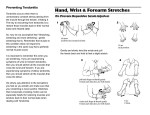
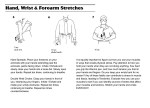
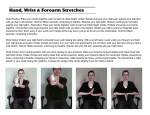
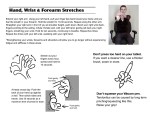
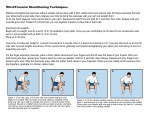
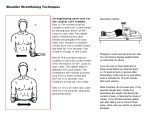
I can’t stress enough the importance of stretching your hands, and forearms every morning and every evening, spend 5-10 minutes going through a stretching routine. These are very easy to do, takes little time to do them.
It’s VERY common in all animation studios. Conditions can slowly develop, the most typical one is Repetitive Strain Injury, it’s a prevalent condition resulting from overusing the hands to perform a repetitive task, such as typing, clicking a mouse, writing, and of course drawing. In simple medical terms, repetitive strain injury (RSI) stems from prolonged repetitive, forceful, or awkward hand movements. The result is minor damage to muscles, tendons, and nerves of the neck, shoulder, forearm, and most commonly hand and wrist, which can cause pain, weakness, or numbness.
If you’re feeling some pains, tingles, weakness, or numbness in the wrist/forearm; one of the best ways to heal quickly are ‘Contrasting Baths’.
What crazy voodoo am I speaking of? A couple different physiotherapists and massage therapists had recommended this technique to me several years ago, and for anyone I knew that tried it, they all say the results are fast and effective.
Commonly used by carpal tunnel suffers, it’s a method of treating muscle soreness, swelling and inflammation, it’s also known as Hot/Cold Immersion Therapy.
You can use the double sink in your kitchen at home, if you don’t have one, then get your hands on two very large identical bowls, it needs to be big enough to submerge your entire forearms from wrist to elbow.
Fill one up with ice cold water (with a couple dozen ice cubes floating in there). The other with very warm water, not tea-kettle boiling hot water, just hot tap water, or as warm as you can handle, no sense in burning yourself of course.
Have a stop watch or clock ready, and submerge your arms for 30 seconds in the hot, then switch to doing 30 sec. in the cold, and repeat a few times back and forth, 30 sec. a piece. After only a few times you’ll notice the hot water getting cooler and the cold water getting warmer, so then the technique grows to be less effective, but by then, the job is done.
The idea is that the extreme heat and cold contracts and expands your blood vessels, promoting greater blood flow to circulate and flush through your arms, and increased blood flow is what aids in healing faster!
Also do yourself some favors and, if you’re not already, start drawing with your whole arm, not just your wrist. I know graphics tablets can be kind of small but the benefits to drawing with your arm instead of your wrist are totally worth it. Plus you have greater control over larger strokes. If you need some help you can put your arm in a wrist brace and try to draw on paper a bit with it, just to get used to the feeling of not using your wrist for everything.
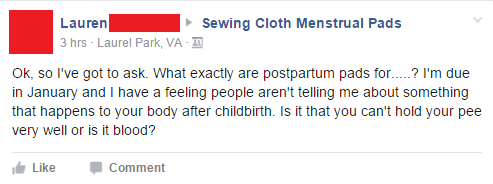
Another woman utterly failed by our society’s devaluation of women’s reproductive health.
We can’t wait around for male doctors to decide what we need to know.
This is why we need to take control and educate ourselves about our own bodies.
and here’s some comments i saw under the post. why is this a pattern?? why is this a recurring theme?? why is this information not common knowledge? what the fuck are doctors doing??
This is news to me so let’s share it so people will know!
Gross tmi: but i passed a pretty big clot after having my daughter. It was about the size of a baseball. It actually hurt worse because while 15 hours of labor opened my cervix, i passed the clot in 30 minutes. I knew it was a possibility because of my midwife and reading, but everyone Ive told after this (mostly other pregnant women) were shocked that this could happen.
In our culture, it’s much more common to do deep research about what family cars we want to buy than we do about childbirth when we ’re pregnant.
Tmi: I passed a huge clot after birth in the bathroom of my hospital room and called the nurse sobbing because I didn’t know it was normal. She treated me like an idiot, but NO ONE told me it was a possibility. And the pain associated with healing for the first couple of weeks after birth was worse than the labor imo. Again, I had no idea. They didn’t tell me a thing besides “sitz bath regularly and change your pads.” Before discharging me from the hospital.
I was most definitely told about this in school. Fucking hell, 4-6 weeks of bleeding? My periods were/are bad enough, why the hell don’t we get told this?
I didn’t know it could last so long, wtf? Is the bleeding inevitable after birth?
Bleeding is inevitable after birth – your uterine wall is shedding a fuck ton of lining. It can last from three to six weeks (possible longer) and it tapers off.
More TMI – I passed a MASSIVE clot after my fourth birth. At this point I already knew this could happen – it’s normal. What I DIDN’T know, was that I had caused it.
My post birth contractions were so bad after the birth that it felt like full transition labor. And they don’t give you anything for the pain. So I used a hot water bottle, without the nurses knowing, and it caused me to bleed even more. I lost so much blood that by the first time they sat me up to go to the bathroom, I fainted. It took three more tries until I could sit up.
Anyway, that’s not the point. The point is, the next morning I passed a clot the SIZE OF ANOTHER PLACENTA I KID YOU NOT, and I know what is and is not normal. So I called for the nurse and through the door told her I had passed a huge clot, and her response was – “It’s not big. I know what big is.” She hadn’t even looked. So I rolled my eyes and said, “Yeah, no. It’s big, I’m telling you.”
So, sounding extremely put upon, she asked me to open the door. I did, and after a long pause she goes, “Okay, yeah, that’s a little big.”
YOU DON’T SAY.
The point I’m trying to get across is that this shit is so common – women not knowing this stuff is so expected, and it keeps getting reinforced. People don’t expect you to know anything, don’t teach you anything, and then make you feel like you’re totally ignorant and a burden for your lack of knowledge when THEY WON’T SHARE.
Fucking learn EVERYTHING you can when it comes to childbirth, girls. It is the single most empowering thing you can do for yourself. And if you missed something, that’s okay. But the more knowledge you arm yourself with, the more in control of your situation you’ll be.
A few post partum tips:
DON’T use a hot water bottle – lol.
ONLY pads – NO tampons. Tampons can cause severe infection, not to mention, you probably don’t want to be shoving anything up there any time soon.
If you’ve had stitches, sitz baths DO help relieve the pain. Another great pain reliever? Dampen some pads and freeze them. Let one thaw slightly and use it on top of another pad. This will help with the pain as well as reduce swelling. Change the pad out as soon as it’s thawed completely. This REALLY helps on the first couple days after giving birth.
If you pass a clot, don’t sweat it. Even the one I passed, which was fucking massive, just required that we keep an eye out to make sure it didn’t happen again. If it does, talk to your doctor.
Take a pain killer half an hour before nursing. Because YES – your uterus is contracting after you give birth, to get back to its original size, and nursing causes much stronger contractions. Taking nursing-safe painkillers won’t prevent the pain, but it will reduce it.
Buy disposable underwear for the first few days after birth. They will get VERY dirty. Or use your ratty old pairs that you’re ready to get rid of. Double up on pads – line them all the way up your ass-crack. I am so serious. And wear dark pants.
Pee in the shower. You do NOT want to wipe down there right after birth because ow. Peeing in the shower lets you just rinse afterwards. Especially if you’ve had stitches, peeing in the shower, with the shower-head rinsing AS you go, keeps stinging to a minimum. And fuck everyone else – keep on peeing in the shower until you feel ready to move back to toilet paper. Middle of the night and need to pee? Get your pants off – get in the shower and just go.
This is just a few things, but PLEASE feel free to send me an ask if you have any questions about ANYTHING childbirth/pregnancy/nursing related. I have four incredible kids. I’ve done it all – c-section, vacuume birth, episiotimy, stitches, with an epidural, without an epidural. I’m here.
More tips: GET A PERI-BOTTLE. If you have a hospital birth, they’ll probably give you one. If not, you can pick up any kind of small squeeze-y bottle (or even an empty, CLEAN CLEAN CLEAN spray bottle if it comes to it). It’s like a little portable bidet. Use it after you go to the bathroom, then pat dry. This way you don’t have to climb into a shower every time if you don’t want.
IME bags of frozen peas in your underwear with proper covering (you don’t want to get frostbite) are the best sort of cold compress.
Those contractions during nursing? They are v v important. They shrink your uterus, helping your body get back to normal faster (and helping you pass blood quicker). They hurt. Keep drinking red raspberry leaf tea (which hopefully you drank during your third trimester). It should help not only with the contractions, but with your milk supply as well. Take a nursing-safe NSAID if you can.
REST. I know this is especially hard for people who are already parents, for poor folk, for people with a ton of responsibilities in general. This is when you call in the cavalry, if you’re lucky enough to have support. FRIENDS AND FAM of birthing persons, leave the parent alone with their baby. Do a load of dishes. Pick up. Check to make sure the parent has their baby supplies handy (as in, within reach). Bring them food. The more they rest, the faster their body heals, and the shorter the bleeding period will be. If it tapers off and then ramps back up, YOU’RE DOING TOO MUCH. Slow down. This is the perfect time to learn that, as a parent, you can’t do it all. Always prioritise your kid. If there’s one time you’re allowed to just let shit go, it’s during your babymoon. (Google is telling me babymoon now means a trip you take with your partner before you have your baby. What. No. “Babymoon” means the first week after your birth. When the hell did that switch happen?) REST. REST. HOLD YOUR BABY. SLEEP. NURSE. EAT. This bonding time is imperative. You and your baby deserve this time.
….I know I keep reblogging this but people keep adding super important information.
I feel like no one tells women this stuff because if a woman was even a little on the fence about having a baby before this would kinda make them run for the damn hills.
…..you are correct, typing.
300% EXTRA SURE I’M NOT HAVING BABIES.
peri bottles, witch hazel or anti-pain anticeptic spray are your friends. Also passing large clots after birth is a WARNING SIGN. Bigger than a half dollar is a sign that you have not passed your entire placenta (this is most common in hospital vaginal births where the mother is not allowed to naturally birth the placenta and instead has it ripped out by the doctor) if there is any placenta left in your uterus you can get extremely ill. This happened to both myself and my mother in law
WOW I didn’t know any of this and I’m terrified of what more I’m unaware of about my own body 😦 Honestly when will we fucking abolish this taboo about the female body…
I had pretty great sex ed in school (lots of contraceptive information, and totally acknowledged that teenagers might have sex) and all of this is news to me.
And, as a 28-year-old person with a uterus, I’m extremely appalled I’m just learning this.
Long, but very important information, even for those who don’t plan to have children, because you will almost certainly know someone who will, and you might be able to to help them. Or at least increase your level of empathy for them.
The shit they don’t tell us.
i need more of this on my dash.
This is just second nature to me because of my job, but I don’t remember where I learned it all. I’ve had moms that have no clue that you bleed after birth. They thought they were dying.
Oh.my.effing.goodness I had absolutely no freaking clue this even happened!! What the actual fuck?!! How do they not teach you all of this in sex ed?! I can’t even right now. Saving to reference when I do have my own kids.
So when I was in float unit and had my orientation shift on the OB/birth unit, I was blown away by all this stuff. I’m a CNA at the moment, so we get the patient rooms ready post-partum and the girl orienting me was talking about all this stuff that I had NO clue about. The only reason why I learned this was because of that orientation and my human physiology class.
My sex ed in middle school and high school was practically non-existent. Everything I learned I did so through planned parenthood and my own research. This stuff NEEDS to be talked about. Because I, as a 26 year old person with a uterus, was unaware of this until this year. And that is fucking sad.
I don’t particularly want kids but I only knew a tiny bit of this and that’s not ok! And the little I knew was from EMT/etc. So for anyone interested in kids!
I only vaguely knew about this before, and it wasn’t from sex-ed.
I am an ER nurse and this is the best description of this event that I have ever heard.
FEMALE HEART ATTACKS
I was aware that female heart attacks are different, but this is description is so incredibly visceral that I feel like I have an entire new understanding of what it feels like to be living the symptoms on the inside. Women rarely have the same dramatic symptoms that men have… you know, the sudden stabbing pain in the chest, the cold sweat, grabbing the chest & dropping to the floor the we see in movies. Here is the story of one woman’s experience with a heart attack:
"I had a heart attack at about 10:30 PM with NO prior exertion, NO prior emotional trauma that one would suspect might have brought it on. I was sitting all snugly & warm on a cold evening, with my purring cat in my lap, reading an interesting story my friend had sent me, and actually thinking, ‘A-A-h, this is the life, all cozy and warm in my soft, cushy Lazy Boy with my feet propped up.
A moment later, I felt that awful sensation of indigestion, when you’ve been in a hurry and grabbed a bite of sandwich and washed it down with a dash of water, and that hurried bite seems to feel like you’ve swallowed a golf ball going down the esophagus in slow motion and it is most uncomfortable. You realize you shouldn’t have gulped it down so fast and needed to chew it more thoroughly and this time drink a glass of water to hasten its progress down to the stomach. This was my initial sensation–the only trouble was that I hadn’t taken a bite of anything since about 5:00 p.m.
After it seemed to subside, the next sensation was like little squeezing motions that seemed to be racing up my SPINE (hind-sight, it was probably my aorta spasms), gaining speed as they continued racing up and under my sternum (breast bone, where one presses rhythmically when administering CPR).
This fascinating process continued on into my throat and branched out into both jaws. ‘AHA!! NOW I stopped puzzling about what was happening – we all have read and/or heard about pain in the jaws being one of the signals of an MI happening, haven’t we? I said aloud to myself and the cat, Dear God, I think I’m having a heart attack!
I lowered the foot rest dumping the cat from my lap, started to take a step and fell on the floor instead. I thought to myself, If this is a heart attack, I shouldn’t be walking into the next room where the phone is or anywhere else… but, on the other hand, if I don’t, nobody will know that I need help, and if I wait any longer I may not be able to get up in a moment.
I pulled myself up with the arms of the chair, walked slowly into the next room and dialed the Paramedics… I told her I thought I was having a heart attack due to the pressure building under the sternum and radiating into my jaws. I didn’t feel hysterical or afraid, just stating the facts. She said she was sending the Paramedics over immediately, asked if the front door was near to me, and if so, to un-bolt the door and then lie down on the floor where they could see me when they came in.
I unlocked the door and then laid down on the floor as instructed and lost consciousness, as I don’t remember the medics coming in, their examination, lifting me onto a gurney or getting me into their ambulance, or hearing the call they made to St. Jude ER on the way, but I did briefly awaken when we arrived and saw that the radiologist was already there in his surgical blues and cap, helping the medics pull my stretcher out of the ambulance. He was bending over me asking questions (probably something like ‘Have you taken any medications?’) but I couldn’t make my mind interpret what he was saying, or form an answer, and nodded off again, not waking up until the Cardiologist and partner had already threaded the teeny angiogram balloon up my femoral artery into the aorta and into my heart where they installed 2 side by side stints to hold open my right coronary artery.
I know it sounds like all my thinking and actions at home must have taken at least 20-30 minutes before calling the paramedics, but actually it took perhaps 4-5 minutes before the call, and both the fire station and St Jude are only minutes away from my home, and my Cardiologist was already to go to the OR in his scrubs and get going on restarting my heart (which had stopped somewhere between my arrival and the procedure) and installing the stents.
Why have I written all of this to you with so much detail? Because I want all of you who are so important in my life to know what I learned first hand.
1. Be aware that something very different is happening in your body, not the usual men’s symptoms but inexplicable things happening (until my sternum and jaws got into the act). It is said that many more women than men die of their first (and last) MI because they didn’t know they were having one and commonly mistake it as indigestion, take some Maalox or other anti-heartburn preparation and go to bed, hoping they’ll feel better in the morning when they wake up… which doesn’t happen. My female friends, your symptoms might not be exactly like mine, so I advise you to call the Paramedics if ANYTHING is unpleasantly happening that you’ve not felt before. It is better to have a ‘false alarm’ visitation than to risk your life guessing what it might be!
2. Note that I said ‘Call the Paramedics.’ And if you can take an aspirin. Ladies, TIME IS OF THE ESSENCE!
Do NOT try to drive yourself to the ER – you are a hazard to others on the road.
Do NOT have your panicked husband who will be speeding and looking anxiously at what’s happening with you instead of the road.
Do NOT call your doctor – he doesn’t know where you live and if it’s at night you won’t reach him anyway, and if it’s daytime, his assistants (or answering service) will tell you to call the Paramedics. He doesn’t carry the equipment in his car that you need to be saved! The Paramedics do, principally OXYGEN that you need ASAP. Your Dr. will be notified later.
3. Don’t assume it couldn’t be a heart attack because you have a normal cholesterol count. Research has discovered that a cholesterol elevated reading is rarely the cause of an MI (unless it’s unbelievably high and/or accompanied by high blood pressure). MIs are usually caused by long-term stress and inflammation in the body, which dumps all sorts of deadly hormones into your system to sludge things up in there. Pain in the jaw can wake you from a sound sleep. Let’s be careful and be aware. The more we know the better chance we could survive to tell the tale.“
Reblog, repost, Facebook, tweet, pin, email, morse code, fucking carrier pigeon this to save a life!
I wish I knew who the author was. I’m definitely not the OP, actually think it might be an old chain email or even letter from back in the day. The version I saw floating around Facebook ended with “my cardiologist says mail this to 10 friends, maybe you’ll save one!” And knew this was way too interesting not to pass on.
Female heart attacks are much different, and most people don’t know it!
This is so much more helpful than the fucking lists that basically describe everything that happens during a really nasty panic attack and then tell you to go seek help as if you don’t have an anxiety disorder that does this to you on a regular basis and can afford to go to the emergency room.