Linguasphere – Kind of like WALS, if I remember correctly, but not quite. (Note: The website is in French.)
GOLD – a unique listing of linguistic terms and definitions. Right now it appears to be having technical issues, but when it works it’s really great. Just click “View GOLD” at the top.
Many Languages (or General Resources)
This is a directory of apparently scanned PDFs of many, many, many books regarding various languages. There are grammars, dictionaries, and more for more than 25 languages.
Conjuguemos: An awesome website, Conjuguemos has verb and vocabulary activities in several (mostly Romance) languages.
Duolingo – don’t tell me you don’t know what this is.
Memrise – let me guess, you don’t know what this is either?
Quizlet – flash cards and accompanying games. There are also many apps that connect to Quizlet and provide Spaced Repetition or other activities with the cards.
Lang-8 – write in the language you’re learning, let others correct you. In turn, you correct posts in your native language.
LingQ links you (get it? LingQ, link you? HAHA) to native speakers around the world. You can join live conversations, get writing corrected, and so on and do the same for them.)
FluentU – a compilation of real world videos in your target language with interactive captions.
Babbel – another language learning resource with many languages available.
Ba Ba Dum – 1500 words, 11 languages, 5 games. Unique site.
Radiolingua – quick and easy sets of beginner’s lessons in many languages.
Busuu is yet another website for learning the basics of many languages. It also features video-chats with native speakers and many many units of grammar/vocab.
Omniglot – writing, writing, and more writing. Goes over the writing system and accompanying pronunciation of every language imaginable, including many conlangs and extinct languages. Truly amazing resource.
LanguageRealm has some good stuff for the languages that it features.
AncientScripts is another website for writing systems, but it is restricted to ancient scripts, many of which are for languages now out of use.
Transparent Language Blog is wonderful. The right side has a list of the languages for which they have any content posted – and for each language there is quite a bit.
SaySomethingIn… is most useful for Welsh but has a few other languages. It involves sessions of listening and repeating along with eventual reading and grammar.
Digital Dialects – games for learning basic vocabulary in lots and lots of languages.
LanguageReef – Indian languages. So many Indian languages.
200 Word Project – learn the basic vocabulary of six African languages by clicking and listening to native pronunciations.
Let’s not forget Wikipedia. Not only does the English version have something on just about any language imaginable, but the website has articles available in lots of languages. I like clicking the “Random article” button and reading whatever comes up.
AwesomeFrench is the greatest French Tumblr blog in the universe. She answers questions about culture and grammar, but don’t be one of those annoying people that asks homework questions or advice about how to turn on your French boyfriend or girlfriend.
Namasensei’s Japanese lessons on YouTube. Goes kind of slowly, and it’s unique because the guy doing the tutorials is usually fairly drunk when he records. But he is living in Japan and has some interesting advice as well as a good understanding of the language.
Japanese from Zero on YouTube – amazing collection of videos ranging from pure grammar lessons to questions and useful explanations
Tae Kim’s grammar guide is seriously one of the best resources out there. And it’s totally free. You can navigate the website, download a PDF for free, or buy a print version.
Just lots of good stuff here, including a nice list of important upper-level words.
One of many websites for learning kanji, Kanjidamage is interesting because the author has a good sense of humor and also explains a lot about the history of the Japanese writing system, so that you can understand it better.
Project Root List aims to list all of the roots and vowel combinations in the Quran. Since Arabic hasn’t changed much in that regard, it’s useful for modern Arabic, too.
A PDF of the book Arabic Verbs and Essentials of Grammar.
You can search the Quran in Classical Arabic here.
Classical Arabic: LearnArabicOnline.com. This is a fantastic resource in that it not only talks about reading and grammar, but also writing styles and eloquence in writing. It is strictly for Classical Arabic, however, not modern spoken or Modern Standard Arabic.
Hindi
Hindi script – really good animations of stroke order and how to write as well as providing instructions on writing.
Quillpad looks like a really great tool for typing in Hindi as well as other Indian languages. Simply type the English letters and the computer converts it. (Note: for beginners still trying to learn the script, learn the script and manually put the characters in. Force yourself to write the script to get yourself to think in that language!)
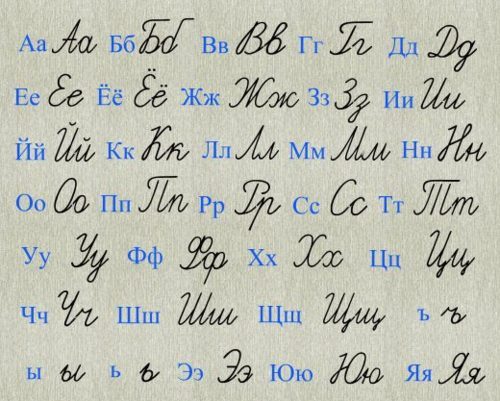
Learn Russian Language – another good website for grammar rules along with the alphabet, pronunciation, and a bit of culture.
100 Top Resources for Learning Russian according to some person. Actually a really good list, includes rough level at which you’ll find each resource useful and the list is broken down by category (textbooks, online, stuff, etc.).
Here is Beowulf in Old English. There’s also a link to a modern English translation just under the title of the page.
Korean
Set of graphics that are wonderful for explaining the Korean script.
Really great website for grammar, script, and vocab. Also offers many of the beginner’s lessons and some of the more advanced ones in Spanish and/or Russian, for you overachievers out there.
Estonian
Here is a nice PDF on some of the characteristics of the Estonian language.
Grammar. This page links to the intermediate stuff; you can go to the menu at the top, and the really basic stuff will be under Discover Estonia.
DW – German news website. Available in 30 languages, however.
Welsh
Lots of vocabulary. (Note: In my experience, this website has only been marginally useful because it doesn’t give gender, some of its nouns are plural when they should be singular, and so on.)
A long, detailed, well-explained resource from the BBC on Welsh grammar.
This is a really good video for listening to the clicks involved in Xhosa pronunciation, including the one that begins the language’s name. He has other lessons, as well.
Mandarin
Some themed vocabulary lists. Actually lots of them.
Here is a more or less miscellaneous collection of concepts and vocab about the Chinese language and culture.
MandarinMadeEZ – Some fun and simple YouTube lessons from Fiona Tian. She’s kind of awkward so if you’re looking for something really serious, don’t go here. Also, cats.
Native American Langauges
Here is an excellent resource for many Native American languages in general.
More links – only some of these are really good, but most of them are useful.
Cherokee language lessons. The link goes to the Cherokee syllabary and pronunciation. Also some readings available.
And finally, I recently started a resources tag (here) that I think I’ll just link to rather than trying to transfer all that stuff over to this post.
I apologize that some of these headings have only one or two resources for them… but remember that the “Many Languages” category can not only provide a lot of further resources and information for the languages listed here, but can also provide stuff for languages not mentioned here!
If you guys have more stuff you’d like me to add for any language, send it to me and I’ll check it out and maybe update this post 🙂
Have you ever thought “Man, I feel impossibly shitty and I don’t know why”?
Run through this checklist before you do anything else.
What have I eaten in the last 24 hours? Is it enough? If not, go and eat some food, you butt.
Am I hydrated? If not, put some fluids in your body, fool.
Have I slept an acceptable amount in the last 24 hours and preceeding few days? If not, do your utmost to have a nap. You need a reset, bro.
Have I been outside/partaken in whatever form of exercise I am capable of? You’re stagnating, homie.
Have I communicated with anyone? At all? About anything? In the last 24 hours? Sup, you’re not actually a lone wolf, and even if you’re just shouting BUTTLUMPS at someone over the intertubes, it’s better than shouting it at yourself inside your own head.
So basically: eat, drink, sleep, walk, and talk. If you still feel like emotional ass after that, start looking for more involved explanations.
This shit is no joke.
All of these are extremely important.
Adding: 6. Have I communicated too much? Am I overstimulated? Do I need some quiet time? Go stare at a blank wall in utter silence for a bit.
I try to go through this kind of checklist whenever I feel funky. It really helps.
THOU is the subject (Thou art…) THEE is the object (I look at thee) THY is for words beginning in a consonant (Thy dog) THINE is for words beginning in a vowel (Thine eyes)
this has been a psa
Also, because H was sometimes treated as a vowel when the grammar rules for thou/thee/thy/thine were formed,THINE can also be used for words beginning with H. For example, both “thy heart” and “thine heart” appear in Elizabethan poetry.
For consistency, however, if you’re saying “thine eyes”, make sure you also say “mine eyes” instead of “my eyes”.
Further to the PSA:
Thou/thee/thine is SINGULAR ONLY.
Verbs with “thou” end in -st or -est: thou canst, thou hast, thou dost, thou goest. Exception: the verbs will, shall, are, and were, which add only -t: thou wilt, thou shalt, thou art, thou wert.
Only in the indicative, though – when saying how things are (“Thou hast a big nose”). Not in the subjunctive, saying how things might be (“If thou go there…”) nor in the imperative, making instructions or requests (“Go thou there”).
The -eth or -th ending on verbs is EXACTLY EQUIVALENT TO THE -(e)s ENDING IN MODERN ENGLISH.
I go, thou goest, she goeth, we go, ye go, they go.
If you wouldn’t say “goes” in modern English, don’t say “goeth” in Shakespearean English.
“Goeth and getteth me a coffee” NO. KILL IT WITH FIRE.
Usually with an imperative you put the pronoun immediately after the verb, at least once in the sentence (“Go thou” / “Go ye”).
YE is the subject (Ye are…). YOU is the object.
Ye/you/your is both for PLURALS and for DEFERENCE, as vous in French.
Sure thing! (sorry for answering this a little late) Prepare yourself for a terrifying wall of links~ I’ve included 300+ songs in Cantonese, Mandarin, Japanese, Korean, Thai, Spanish, French, Italian, German, Vietnamese, Hungarian and Tibetan. Feel free to reblog and add on~
Cantonese
These ones are a bit more mellow, but they’re technically still considered pop ahahaha. The Cantonese section will probably be the longest, since I’m most familiar with Canto-pop.
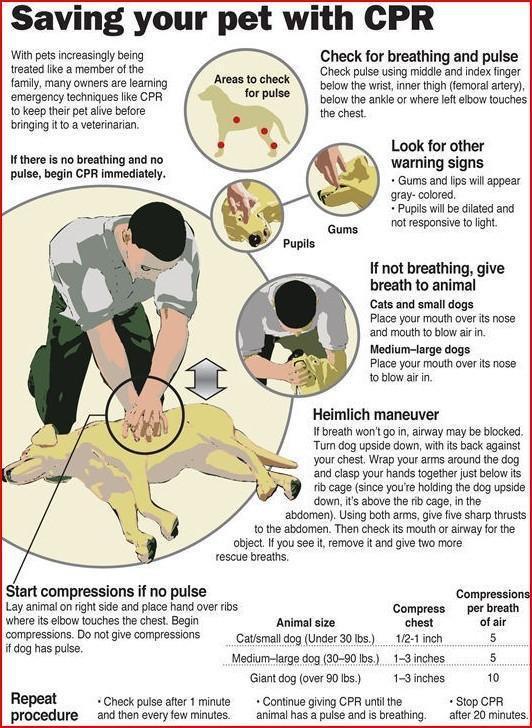
A little OT (sorry) but I thought it was useful to share with anyone who loves dogs: Here is how to save your dog with CPR (image taken from Working Dog magazine)
If they could be explained in one post, i’m sure we’d all have less problems lmao but i’ll try!
1. What cases are there?
German has four cases: Nominativ, Genitiv, Dativ und Akkusativ. (for any Latin nerds: Same as in Latin minus Ablative and Vocative.)
2. Why are they necessary?
Well, for once, you’ll need them if you want native speakers to understand what you’re saying. But let’s go a little deeper and compare German to English:
In English, the meaning depends on the sentence structure. “The man bit the dog” and “The dog bit the man” have very different meanings even though both sentences use the same words – that’s because of the typical SVO-order. In English, the subject generally comes first, then some kind of verb, then the object (there are more difficult cases of course, but let’s not go into that rn). English has very little morphology, meaning that nouns/pronouns/determiners don’t inflect (a lot) depending on the case they’re in.
In German, you can switch stuff around until you’re dizzy. “Der Hund biss den Mann” and “Den Mann biss der Hund” both mean the same, because “den” indicates that “Mann” is in the Akkusativ, thus he’s the one being bitten, no matter where you put him in the sentence. The case morphology allows a freer sentence order without leading to possible misunderstandings.
3. So how do I know which case I need?
This is the moment where it gets more complicated. You can associate the following questions with each case:
Nominativ = Wer oder was? (Who?. The subject of a sentence is always in the nominative case.)
Genitiv = Wessen? (Whose?. Typically describes possession or comes as a rule after certain prepositions like “wegen” or verbs like “gedenken”.)
Okay, we can deal with that. Now on to the more difficult stuff:
Dativ = Wem?
Akkusativ = Wen oder was?
To understand this, some knowledge of grammar is definitely an advantage. Consider the following sentences:
I have a book. = Ich habe ein Buch.
This is all well and nice. Subject (NOM), Verb, Object (AKK).
In English, you would call “a book” a direct object because the verb “to have” is transitive, meaning it carries one object. “I have.” isn’t generally a full sentence and is expected to be followed by an object.
So apparently all our problems are solved with the Akkusativ/direct object. What now?
I give you a book. = Ich gebe dir ein Buch.
This is the critical moment. Subject (NOM), Verb, Object (DAT), Object (AKK).
Suddenly we have two objects because the verb “to give” makes us expect information about what we’re giving (direct object, AKK) and to whom we’re giving it (indirect object, DAT).
Such verbs are called ditransitive, meaning they can carry two objects. Just saying “I give.” leaves us wondering what you’re talking about because we’re missing key information.
English, as explained above, solves this with sentence order by making the indirect object come first or by indicating it with “to” (“I give a book to you”). German solves it with inflection, putting the indirect object in a different case.
That’s why things like “Ein Buch gebe ich dir” and “Dir gebe ich ein Buch” are both possible in German.
There are also intransitive verbs which carry either no object at all or just a dative object (“Ich antworte ihm”).
4. How do I know which verbs carry which object(s)?
This list will save you. At some point (once you’ve gotten to a certain level in German), you’ll have a gut feeling about which object(s) to use just from experience. Give it some time!
5. What about determiners and pronouns?
I actually think this is less work because it’s one table of endings each, and once you’ve got that down you should be fine.
This handbook explains everything really well in my opinion.
side note: As a native speaker and language nerd who loves grammar, it’s hard for me to judge if this was helpful or just confusing as hell. I hope I still answered your question to some extent! If you need more help or have problems with a specific sentence, let me know and i’ll try my best! 🙂
heyyyy! You’re learning german? Cool!! German is my mother language so maybe I can help you with some media for improving your german. v cool and up to date.













 refessence