Just about every writer out there has several go-to websites that they use when it comes to their writing. Be it for creativity, writer’s block, to put you in the mood or general writing help. These are mine and I listed them in hopes that you’ll find something that you’ll like or find something useful. I’ve also included some websites that sounded interesting, but I haven’t tried out yet.
Spelling & Grammar
- Grammar Girl – Grammar Girl’s famous Quick and Dirty Tips (delivered via blog or podcast) will help you keep your creative writing error free.
- The Owl – is Purdue University’s Online Writing Lab (OWL) it’s a great resource for grammar guides, style tips and other information that can help with your writing, especially academics.
- Tip of My Tongue — have you ever had trouble of thinking of a specific word that you can’t remember what it is? Well, this site will help you narrow down your thoughts and find that word you’ve been looking for. It can be extremely frustrating when you have to stop writing because you get a stuck on a word, so this should help cut that down.
- Free Rice – is a great way to test your vocabulary knowledge. What’s even better about this site is that with every correct answer, they donate 10 grains of rice to the United Nations World Food Program. So, please disable your adblock since they use the ads on the site to generate the money to buy the rice.
- HyperGrammar – the University of Ottawa offers up a one-stop guide for proper spelling, structure, and punctuation on this site.
- AutoCrit – the AutoCrit Editing Wizard can check writing for grammar errors, clichés and other no-no’s. It also provides a number of other writing resources as well.
- Writer’s Digest – learn how to improve your writing, find an agent, and even get published with the help of the varied blogs on this site.
- Syntaxis – it allows you to test your knowledge of grammar with a ten-question quiz. The questions change every time you take the quiz so users are sure to be challenged each time around. It definitely helps writers know if there’s something that they need to brush up on.
- Word Frequency Counter – this counter allows you to count the frequency usage of each word in your text.
- EditMinion – is a free robotic copy editor that helps you to refine your writing by finding common mistakes.
- Proofreading for Common Errors – this is a simple tutorial on proofreading your writing by Indiana University.
- BBC – has a section for helping you with your skills, especially in writing, from grammar to spelling, to reading, to listening and to speaking.
Tools
- Copyscape – is a free service that you can use to learn if anyone has plagiarized your work. It’s pretty useful for those that want to check for fanfiction plagiarism.
- Plagium – is another a copy detection system, that provides a very similar service to Copyscape and uses Yahoo! rather than Google to perform its searches. Just keep in mind that searches for simple text up to 25,000 characters remains free of charge, but any larger requires credits to be purchase.
- Write or Die – is an application for Windows, Mac and Linux which aims to eliminate writer’s block by providing consequences for procrastination.
- Written? Kitten! – is just like Write or Die, but it’s a kinder version. They use positive reinforcement, so every time you reach a goal they reward you with an adorable picture of a kitten.
- Fast Fingers – offers you an easy way to improve your typing skills. It’s puts you through a quick typing game that tests your typing speed and improves it at the same time. It’s also a great way for writers to warm up.
Information & Data
- RefDesk – it has an enormous collection of reference materials, searchable databases and other great resources that can’t be found anywhere else. It’s great to use when you need to find something and check your facts.
- Bib Me – it makes it easy to create citations, build bibliographies and acknowledge other people’s work. This is definitely something that academics will love. It’s basically a bibliography generator that automatically fills in a works cited page in MLA, APA, Chicago or Turbian formats.
- Internet Public Library – this online library is full of resources that are free for anyone to use, from newspaper and magazine articles to special collections.
- The Library of Congress – if you’re looking for primary documents and information, the Library of Congress is a great place to start. It has millions of items in its archives, many of which are accessible right from the website.
- Social Security Administration: Popular Baby Names – is the most accurate list of popular names from 1879 to the present. If your character is from America and you need a name for them, this gives you a accurate list of names, just pick the state or decade that your character is from.
- WebMD – is a handy medical database loaded with information. It’s not a substitute for a doctor, but can give you a lot of good information on diseases, symptoms, treatments, etc.
MedlinePlus
– is the National Institutes of Health’s Web site that contains information about diseases, conditions, and wellness issues in language you can understand. It also offers reliable, up-to-date health information, anytime, anywhere, for free.You can use the site to learn about the latest treatments, look up information on a drug or supplement, find out the meanings of words, or view medical videos or illustrations. You can also get links to the latest medical research on your topic or find out about clinical trials on a disease or condition.
- Mayo Clinic –
is a nonprofit medical practice and medical research group.
- World Health Organization (WHO) – is a specialized agency of the United Nations that is concerned with international public health.
Its current priorities include communicable diseases, in particular HIV/AIDS, Ebola, malaria and tuberculosis; the mitigation of the effects of non-communicable diseases; sexual and reproductive health, development, and ageing; nutrition, food security and healthy eating; occupational health; substance abuse; and driving the development of reporting, publications, and networking.
- Google Scholar – is an online, freely accessible search engine that lets users look for both physical and digital copies of articles. It searches a wide variety of sources, including academic publishers, universities, and preprint depositories and so on. While Google Scholar does search for print and online scholarly information, it is important to understand that the resource is not a database.
- The Old Farmer’s Almanac – this classic almanac offers yearly information on astronomical events, weather conditions and forecasts, recipes, and gardening tips.
- State Health Facts – Kaiser Family Foundation provides this database, full of health facts on a state-by-state basis that address everything from medicare to women’s health.
- U.S. Census Bureau – you can learn more about the trends and demographics of America with information drawn from the Census Bureau’s online site.
- Wikipedia – this shouldn’t be used as your sole source, but it can be a great way to get basic information and find out where to look for additional references.
- Finding Data on the Internet – a great website that list links that can tell you where you can find the inflation rate, crime statistics, and other data.
Word References
- RhymeZone – whether you’re writing poetry, songs, or something else entirely, you can get help rhyming words with this site.
- Acronym Finder – with more than 565,000 human-edited entries, Acronym Finder is the world’s largest and most comprehensive dictionary of acronyms, abbreviations, and initials.
- Symbols.com – is a unique online encyclopedia that contains everything about symbols, signs, flags and glyphs arranged by categories such as culture, country, religion, and more.
- OneLook Reverse Dictionary – is a dictionary that lets you describe a concept and get back a list of words and phrases related to that concept. Your description can be a few words, a sentence, a question, or even just a single word.
- The Alternative Dictionaries – is a site that you can look up slang words in all types of languages, including Egyptian Arabic, Cherokee, Cantonese, Norwegian and many, many others.
- Online Etymology Dictionary – it gives you the history and derivation of any word. Etymologies are not definitions; they’re explanations of what our words meant and how they sounded 600 or 2,000 years ago.
- MediLexicon – is a comprehensive dictionary of medical, pharmaceutical, biomedical, and health care abbreviations and acronyms.
- Merriam Webster Online – the online version of the classic dictionary also provides a thesaurus and a medical dictionary.
- Multilingual Dictionary – it translate whatever you need from 30 different languages with this easy-to-use site.
Writing Software
- Open Office – why pay for Microsoft products when you can create free documents with Open Office? This open source software provides similar tools to the Microsoft Office Suite, including spreadsheets, a word processor, the ability to create multimedia presentations, and more.
- LibreOffice – is a free and open source office suite. It was forked from OpenOffice.org in 2010, which was an open-sourced version of the earlier StarOffice. The LibreOffice suite comprises programs to do word processing, spreadsheets, slideshows, diagrams and drawings, maintain databases, and compose math formula.
- Scrivener – is not a free program, but it’s certainly a very popular one. It’s great for organizing research, planning drafts, and writing novels, articles, short stories, and even screenplays.
- OmmWriter – is for Mac OS X, a free simple text processor that gives you a distraction free environment. So you can focus only on your writing without being tempted or distracted by other programs on your computer. They are currently working on a Windows version of their software as well, so keep an eye out for that if you’re interested.
- FocusWriter – is another free distraction-free writing application that keeps your writing space simple and clean without sacrificing functionality. It includes a daily goal tracker—work count and time spent writing—spell checking, real-time feedback on variables like word and page count, and tabbed document browsing. The great thing about this is that it’s available for Windows, Mac and Linux.
- Q10 – is a free portable distraction-free writing tool for Windows. The interface includes nothing but a tiny bar at the bottom that displays the character, word, and page count—you can toggle the bar off for a totally distraction free workspace.
- Evernote – is a free app for your smartphone and computer that stores everything you could possibly imagine losing track of, like a boarding pass, receipt, article you want to read, to do list, or even a simple typed note. The app works brilliantly, keeping everything in sync between your computer, smartphone, or tablet. It’s definitely a useful app for writers when you have ideas on the go.
- Storybook – this open source software can make it easier to manage your plotlines, characters, data, and other critical information while penning a novel.
- ScriptBuddy – is a full-fledged screenplay software program. It handles the proper screenplay format automatically, so you can concentrate on your story. It is easy to use and the basic version is free.
- TheSage – is a free application, which is a comprehensive English dictionary and thesaurus that provides a number of useful and in some cases unusual search tools.
- Sigil – is ideal for e-book authors because it’s a free EPUB editor with a stack of essential features.
- YWriter5 – is a free word processor and is designed for Windows XP, Vista and beyond. It’s a small but very comprehensive tool which helps you to plan your novel. It breaks your novel into chapters and scenes, helping you keep track of your work while leaving your mind free to create. You can set up deadlines, for instance, and the program’s Work Schedule report will let you know how much you’ll have to do, each day, to finish on time. You can even enter your characters, locations and items and freely organize them into scenes. This definitely sounds like it’ll be useful for NaNoWriMo writers.
- Kingsoft Office (WPS Office) – is an office suite for Microsoft Windows, Linux, iOS and Android OS. The basic version is free to use, but a fully featured professional-grade version is also available. This software allows users to view, create and share office documents that are fully compatible with dozens of document formats, including Microsoft PowerPoint, Word and Excel. In other words, the format is similar to a Microsoft Word document (.DOC or .DOCX file) and supports formatted text, images, and advanced page formatting. Kingsoft Writer documents can be converted to Microsoft Word *.doc files in the software.
Creativity, Fun & Miscellaneous
- National Novel Writing Month – is one of the most well-known writing challenges in the writing community, National Novel Writing Month pushes you to write 50,000 words in 30 days (for the whole month of November).
- WritingFix – a fun site that creates writing prompts on the spot. The site currently has several options—prompts for right-brained people, for left-brained people, for kids—and is working to add prompts on classic literature, music and more.
- Creative Writing Prompts – the site is exactly what it says. They have 100+ and more, of prompts that you can choose from.
- My Fonts – is the world’s largest collection of fonts. You can even upload an image containing a font that you like, and this tells you what it is.
- Story Starters – this website offers over one trillion randomly generated story starters for creative writers.
- The Gutenberg Project – this site is perfect for those who like to read and/or have an ereader. There’s over 33,000 ebooks you can download for free.
- The Imagination Prompt Generator – click through the prompts to generate different ideas in response to questions like “Is there a God?” and “If your tears could speak to you, what would they say?”
- The Phrase Finder – this handy site helps you hunt down famous phrases, along with their origins. It also offers a phrase thesaurus that can help you create headlines, lyrics, and much more.
- Storybird – this site allows you to write a picture book. They provided the gorgeous artwork and you create the story for it, or just read the stories that others have created.
- Language Is a Virus – the automatic prompt generator on this site can provide writers with an endless number of creative writing prompts. Other resources include writing exercises and information on dozens of different authors.
Background Noise/Music
- SimplyNoise – a free white noise sounds that you can use to drown out everything around you and help you focus on your writing.
- Rainy Mood – from the same founders of Simply Noise, this website offers the pleasant sound of rain and thunderstorms. There’s a slide volume control, which you can increase the intensity of the noise (gentle shower to heavy storm), thunder mode (often, few, rare), oscillation button, and a sleep timer.
- Coffitivity – a site that provides three background noises: Morning Murmur (a gentle hum), Lunchtime Lounge (bustling chatter), and University Undertones (campus cafe). A pause button is provided whenever you need a bladder break, and a sliding volume control to give you the freedom to find the perfect level for your needs and moods. It’s also available as an android app, iOS app, and for Mac desktop.
- Rainy Cafe – it provides background chatter in coffee shops (similar to Coffitivity) AND the sound of rain (similar to Simply Rain). There’s also individual volume and on/off control for each sound category.
- MyNoise: Online Fire Noise Generator – If you love the sound of fire crackling in a fireplace, this is the site for you.
- 8tracks – is an internet radio website and everyone can listen for
free, well it use to be completely free. Unlike other music oriented social network such as Pandora or Spotify, 8tracks doesn’t have commercial interruption (that’s if you get 8tracks Plus). Users create free accounts and can either browse the site and listen to other user-created mixes for as long as they like, and/or they can create their own mixes. It’s a perfect place to listen to other writer’s playlist, share yours or find music for specific characters or moods. Note: Joining is still free, however you’re now limited to 1 hour of free listening for each week (or more depending on how much people like your mixes). If you want unlimited access it’s $30 per year or $5.00 a month.
- Playmoss – with 8tracks no longer having free unlimited listening and no commercial interruptions many people looked for an alternative and Playmoss is what 8tracks use to be. It has all the same basic features that 8tracks has, only with extra goodies like unlimited skips, able to see the entire tracklist before playing, start at any point in the playlist, see how many playlists contain a certain song and even collaborate playlists with other people.
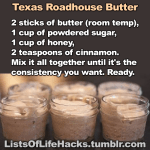


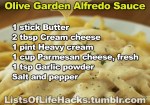
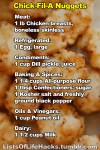
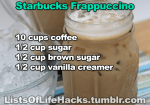
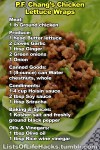

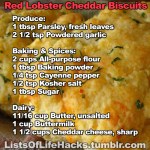

Secret Recipes To Try At Home
Here are the instructions since people keep asking!
Panera Mac N Cheese
Wendy’s Frosty
Olive Garden Alfredo Sauce
Chick-Fil-A Nuggets
Starbucks Frappucino
P.F. Chang’s Chicken Lettuce Wraps
Chick-Fil-A Frosted Lemonade
Red Lobster Cheddar Biscuits
Sonic Cherry LimeadeHoly fuck
a fools guide to not wanting to die anymore
by me, a fool who doesnt wanna die anymore
- never make a suicide joke again. yes this includes “i wanna die” as a figure of speech. swear off of it. actually make an effort to change how you think about things.
- find something to compliment someone for at least 4 times a day. notice the little things about the world that make you happy, and use that to make other people happy.
- talk to people. initiate conversation as often as you possibly can. keep your mind busy and you wont have to worry anymore
- picture the bad intrusive thoughts in youe head as an edgy 13 year old and tell them to go be emo somewhere else
- if someone makes you feel bad most of the time, stop talking to them. making yourself hang out with people who drain you is self harm. stop it.
… 8|
That’s some pretty good advice. I don’t know what’s left of my humor after ‘guess I’ll just die’ jokes but it’s worth a shot.
Personally i went from “guess I’ll die” jokes to “IF I HAVE TO BE HERE FOR 5 MORE MINUTES I PROMISE YOU I WILL BUY JUST, AN ARRAY OF CLOTHES.” and other wild hyperbolic stuff. Just replace the death part with something ridiculous and off topic. Its very entertaining
This also works with calling myself things like stupid, worthless, trash, etc. Even if you do this jokingly to yourself, your brain still believes it, and keeps up the cycle. Seriously, I found that when I stopped saying these things about myself, even jokingly, it made a massive difference.
Here’s a tip I picked up from a friend that’s helped me a lot — replace self deprecating jokes with ironically self aggrandizing jokes
Like every time I trip and fall, instead of saying “l’m just a disaster human” I say “I’m the epitome of grace and beauty”
Or like, when I draw a picture I’m not 100% happy with, instead of saying “my art is trash” I say something like “you know I think it’s time we replaced the Mona Lisa”
When you do that you get to make a joke, but you’re ALSO getting practice building yourself up, y’know?
And eventually it becomes a reflex and you get so used to it that you can say nice stuff about yourself even when you AREN’T joking
The last tip works so well!!
A while back when I was eating dinner at my friend’s garden, there was a bowl of melted ice
So I was going to throw the water away in the yard, but accidentally threw the entire bowl…
I said something like ”Throwing is an art and it seems I have mastered it!”
and there was this guy who rarely even smiles and he laughed for 5 minutes and kept smiling the rest of the evening it was amazing
Make Reader’s Care
Having your readers care about the characters and plot is ideal, but it’s not always easy. Here are some tips to help you get your readers to care:
Plots that go nowhere.
Plots that go nowhere or characters that inspire no interest are death to your stories. If nothing interesting happens in a novel, readers are likely to put it down. If characters don’t engage the readers—their minds or emotions or curiosity—you get the same result—readers tossing aside the book without reading to the end.
So the task for writers is to engage the reader and to do so as soon as possible.
The days when a book could go 50 to 75 or more pages before the story got going are well behind us. Yes, some stories and some genres allow for a more leisurely opening. But unless you’re paying them to read or they’re reading a slow-moving novel as an exercise, today’s readers simply aren’t going to give you 50 pages to entice them. They have too many other uses of their time and if you can’t catch their attention in the early pages, they’re going to be gone. And they’re going to carry their impression of your poor writing skills with them, to be brought out any time they see your name on a book jacket.
You typically only get one chance to ensnare readers and once you fail to do that, it’s likely you won’t get another chance. Not with the same story.
My advice for you today is simple—make readers care. And do it early in the story. And then do it often throughout the story.
And while you’re at it, use different techniques and characters to ensure that readers have something interesting to read as they follow your characters chapter by chapter to the story’s conclusion.
In every story, in every scene, for every event—make readers care.
You never want a reader saying, “So what? What’s the purpose of this scene [or event]?”
Even when readers don’t understand the purpose of every bit of action or every line of dialogue, you still want them paying attention and interested. You want them involved. And they become involved when the plot and characters are involving.
You want readers engaged, caring about what happens to your characters or what happens next. You want readers sitting up and paying attention, eager to not miss one word or one little event.
Write so that readers pay attention. Make them care about what’s happening and what might happen. Make them anticipate and fear the possibilities that you’ve tantalizingly woven into your text.
Opening Pages
In your early pages, unless you’re writing a series, everything is new to the reader. You’ve got dozens of ways to interest readers who come to your novel wanting to be enticed into your fictional world. You can—
introduce an unforgettable character
establish an intriguing world
paint an irresistible tone or mood
dump readers into compelling action
Readers are predisposed to want to enjoy your novel: they’ve been intrigued by the cover or a blurb or the description of a friend; they know the genre and have expectations that your novel will conform to the genre specifics that they so love; they read the first couple of pages and got hooked; or maybe they’ve read another of your books. Whatever the reason, most readers want to love your story, want to get lost in your imaginary world with your imaginary characters and their oh-so-real dramas.
It doesn’t take much to entice the reader in the early pages. But it does take something.
Make the reader care about a character or about the story world right away. And then look for ways to continue making him care throughout the story.
First Third of the Book
Once a reader is hooked by the story’s beginning—truly hooked—you could go a little while on the interest you stirred in the early pages. But at some point you have to give the reader something new to think about.
The story’s original hook is not enough to see a reader through 400 pages of plot.
Once you’re beyond the introduction of plot, character, and setting, you’ve got to keep the reader’s interest. Writers typically do this with the introduction of new characters, challenges for the main characters, and action or events that shake up both characters and readers.
At this point in a piece of long fiction, you can send characters, plot, and readers off in a new direction, exploding the readers’ expectations and reminding readers that this is a new story and it won’t be going exactly where they expect it to go, no matter how much it fits genre conventions.
While you can’t always switch up your story as you approach the end—you’ve got to follow through with plot lines and character personalities that you’ve established throughout the novel—you can do a bit of shaking up in the first third of the story. A predictable story doesn’t engage the reader the same way an unfamiliar story does. A predictable story can be read with one eye while the other is engaged in different pursuits. A fresh story, one the reader can’t predict, keeps the reader’s focus. And his interest. And that’s what you want to draw from the reader—his unwavering attention and interest.
Use the first third of your story to—
- introduce characters and their goals and motivations—this includes the antagonist and her goals and motivations
- set up hurdles and challenges for the main characters
- reveal some of the main characters’ strengths and weaknesses
- write action events that move the story forward
- deepen the quirks of your fictional world
- make characters and readers feel a variety of emotions
- show what’s at stake
- give characters reasons to risk no matter what’s at stake
- introduce a mystery or a dilemma that can’t be resolved in a single scene
- induce reader anticipation
Make sure all scenes have a purpose. Actually, give scenes multiple purposes. Use layering to add different elements to a scene so it accomplishes several functions. All scenes should advance plot, reveal character, establish or change tone or mood, or raise the conflict level. If a scene achieves several of these purposes at the same time, you’ve written a strong scene. A cohesive scene.
Scenes with interrelated elements pull a story’s threads tight, making that story harder to unravel. Look for ways to purposely combine a scene’s elements so that the scene serves multiple needs.
Middle of the Book
Because so much happens in the middle chapters—and because so many of the events and dialogue include explanations and back story and perhaps flashbacks—the middle of a novel can get bogged down, trapping not only characters in scenes or settings for pages when they should be in and out in moments, but trapping and frustrating readers as well.
Don’t think that the middle chapters of a novel are restricted for established characters and their problems; you can always introduce new characters or reveal unknown traits of existing characters in the middle chapters, especially the early middle chapters.
You can add or take away characters midbook—and both are wonderful options as methods for shaking up your characters. And when characters are unsettled, you know you’ve got your readers unsettled. And when you’ve got their emotions involved, you know readers care.
For middle chapters, think change. Don’t allow the status quo to go undisturbed for long. You can get into a rhythm with your writing that makes every scene the same length, that gives every sentence the same structure or pattern. But sameness lulls—bores—the reader.
Break up patterns and rhythms.
Give readers a variety of scene and chapter lengths. Make sure different characters open or close chapters. Change the setting. Kill off a character. Reveal a secret. Change something. Change several somethings.
Introduce the unusual to recapture the reader’s attention. Make it imperative that readers pay attention.
Speed or slow the pace. Break something. Add in a betrayal.
Block the protagonist’s progress; frustrate the antagonist so he tries even harder to ruin the protagonist. Have friends of both protagonist and antagonist desert them. Embarrass characters so they must go to great lengths to save face.
Raise the stakes so that only a few characters can stay the course.
Use the middle chapters to—
- reveal the true inner character of your main characters
- take characters to and then beyond the point of no return
- uncover elements of the fictional world/setting that help characters or hurt them
- build the plot so events are timely and inevitable and causally related
- show characters as vulnerable
- stir anticipation for the climax and showdown
The events and feel of the beginning of the middle will be different from the end of the middle—the closer a story gets to the climax, the faster it should move. Fast is a relative term, of course, and some stories won’t rush toward the end the way others will, but all stories should induce in the reader a sense of movement, of heading some place where something explosive will happen where events will come to a head and answers will be made known.
If readers don’t have a sense that something is going to happen, that the main character’s world isn’t at risk of unraveling, then you haven’t giving them much reason to stay with your story.
Entice them with the promise of something climactic, with the possibility of doom and a slight possibility of resounding success. But make the outcome uncertain; you do want the ending to seem inevitable once it arrives, but you don’t want it predictable. Include reasons in your middle chapters for why it’s unlikely the protagonist will succeed—his friends have deserted him; he fears his own strength but knows well his weaknesses; he’s never won against this particular opponent; what he’s trying to achieve has never been accomplished.
Those Final Chapters
Once you’ve got the reader anticipating the ending, you’ve got to deliver what you promised. And more.
The chapters that lead directly to the climax should be relentless. They should move forward, all the separate elements and pieces coming together in logical sequences that fit everything that has come before and that satisfy the reader.
The pace should definitely start to move. If the pace of your story doesn’t increase somewhere around the two-thirds mark, go back and rework your scenes from that point forward.
Increase the anticipation level in the reader. Make him wonder how you’re going to resolve the story’s major and minor problems. Move characters into place so they’re ready to play their parts.
In the final chapters, you’ve got to deliver the payoff. And it has to fit everything you’ve included up to that point. For the end chapters—
- build to the climax
- actually write and include a climactic scene
- make the protagonist the one responsible for her story’s ending—this is not the time to introduce new characters or to have a secondary character save the day
- make sure the climax takes place on stage—no summaries for the climax
- resolve major issues—tie up loose ends
- include a resolution—show or tell what happens to the protagonist after the final showdown with the antagonist (or with his problem)
- show what it cost the protagonist to follow through with her convictions
- stop the story without dragging the resolution on for pages
Some of these suggestions will obviously fit in at more than one section of a novel. The point is, you want readers engaged. And you have to consciously give them engaging material at every stage of a story. You can lose readers at any stage, but if you’re aware of that, aware of the need to entice them all the way through the novel, it’s likely that you’ll include story elements that hold their attention.
If you make readers care about your main characters and their problems, if you make every scene relevant, every bit of dialogue purposeful, then it’s more likely the readers will follow you to the final page. And if you satisfy the reader who’s gone through the entire adventure with you and your characters with an ending that pulls together every story thread you introduced, then you’ve probably earned yourself a reader for your next book.
Give readers a reason to care. Don’t give them any reason to ask so what concerning a story event or section of dialogue or character decision. Give characters stories that challenge them and that hold the interest of the reader.
Make your stories exciting for those who live through them as well as those who read the adventures you create.
Write stories that capture and hold your readers.
I hope this helped! If you have any questions, feel free to drop by my ask box!!!





Words to replace said, except this actually helps
I got pretty fed up with looking for words to replace said because they weren’t sorted in a way I could easily use/find them for the right time. So I did some myself.
IN RESPONSE TO
Acknowledged
Answered
ProtestedINPUT/JOIN CONVERSATION/ASK
Added
Implored
Inquired
Insisted
Proposed
Queried
Questioned
Recommended
TestifiedGUILTY/RELUCTANCE/SORRY
Admitted
Apologized
Conceded
Confessed
ProfessedFOR SOMEONE ELSE
Advised
Criticized
SuggestedJUST CHECKING
Affirmed
Agreed
Alleged
ConfirmedLOUD
Announced
Chanted
CrowedLEWD/CUTE/SECRET SPY FEEL
Appealed
Disclosed
MoanedANGRY FUCK OFF MATE WANNA FIGHT
Argued
Barked
Challenged
Cursed
Fumed
Growled
Hissed
Roared
SworeSMARTASS
Articulated
Asserted
Assured
Avowed
Claimed
Commanded
Cross-examined
Demanded
Digressed
Directed
Foretold
Instructed
Interrupted
Predicted
Proclaimed
Quoted
TheorizedASSHOLE
Bellowed
Boasted
BraggedNERVOUS TRAINWRECK
Babbled
Bawled
Mumbled
Sputtered
Stammered
StutteredSUAVE MOTHERFUCKER
Bargained
Divulged
Disclosed
ExhortedFIRST OFF
BeganLASTLY
Concluded
ConcurredWEAK PUSY
Begged
Blurted
Complained
Cried
Faltered
FrettedHAPPY/LOL
Cajoled
Exclaimed
Gushed
Jested
Joked
LaughedWEIRDLY HAPPY/EXCITED
Extolled
Jabbered
RavedBRUH, CHILL
Cautioned
WarnedACTUALLY, YOU’RE WRONG
Chided
Contended
Corrected
Countered
Debated
Elaborated
Objected
Ranted
RetortedCHILL SAVAGE
Commented
Continued
Observed
SurmisedLISTEN BUDDY
Enunciated
Explained
Elaborated
Hinted
Implied
Lectured
Reiterated
Recited
Reminded
StressedBRUH I NEED U AND U NEED ME
Confided
Offered
UrgedFINE
Consented
DecidedTOO EMO FULL OF EMOTIONS
Croaked
Lamented
Pledged
Sobbed
Sympathized
Wailed
WhimperedJUST SAYING
Declared
Decreed
Mentioned
Noted
Pointed out
Postulated
Speculated
Stated
Told
VouchedWASN’T ME
Denied
LiedEVIL SMARTASS
Dictated
Equivocated
Ordered
Reprimanded
ThreatenedBORED
Droned
SighedSHHHH IT’S QUIET TIME
Echoed
Mumbled
Murmured
Muttered
Uttered
WhisperedDRAMA QUEEN
Exaggerated
Panted
Pleaded
Prayed
PreachedOH SHIT
Gasped
Marveled
Screamed
Screeched
Shouted
Shrieked
Yelped
YelledANNOYED
Grumbled
Grunted
Jeered
Quipped
Scolded
Snapped
Snarled
SneeredANNOYING
NaggedI DON’T REALLY CARE BUT WHATEVER
Guessed
VenturedI’M DRUNK OR JUST BEING WEIRDLY EXPRESSIVE FOR A POINT/SARCASM
Hooted
Howled
YowledI WONDER
Pondered
Voiced
WonderedOH, YEAH, WHOOPS
Recalled
Recited
RememberedSURPRISE BITCH
RevealedIT SEEMS FAKE BUT OKAY/HA ACTUALLY FUNNY BUT I DON’T WANT TO LAUGH OUT LOUD
Scoffed
Snickered
SnortedBITCHY
Tattled
Taunted
Teasedreblog to save a writer
excellent resource
please dont use said for everything
But also please don’t avoid said
How to Self Rescue in the Event you Fall Through Frozen Ice
this is really amazing!
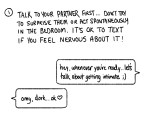
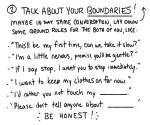
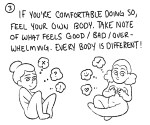
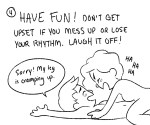
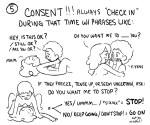
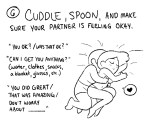
Some tips for happy sex with your babe 💋
Too criminally important not the reblog. It doesn’t matter how “good” at sex you are, if you are an attentive and caring lovemaker you will have amazing experiences.
 refessence